History & philosophy
From Hawaii
to Fleet.
Most martial arts come with centuries of tradition and a long chain of teachers. Small Circle Jujitsu has one originator, one clear idea, and a lineage you can count on one hand. This is the story of how it got here.
The roots
Born in Hawaii.
In the early twentieth century, Hawaii was a melting pot of martial traditions. Japanese immigrants brought jujitsu and judo. Okinawans brought karate. Filipinos brought escrima. And a man named Henry Seishiro Okazaki did something radical - he blended them together.
Professor Okazaki founded Kodenkan Jujitsu (the Danzan-ryu system), combining classical jujitsu with karate, boxing, wrestling, lua, and kung fu. He broke with Japanese tradition by teaching non-Japanese students - a quiet revolution.
It was in this open, cross-pollinating environment that a young Wally Jay would begin his martial arts education - and start asking the questions that would change everything.
The seed
A wrist snap
that changed everything.
In 1940, Wally Jay trained under Ken Kawachi - the Hawaiian judo champion. Kawachi emphasised something that most instructors glossed over: wrist action. A small, precise rotation of the wrist at the right moment could multiply leverage exponentially.
For Jay, this was the seed. He saw that the same idea - tight, efficient, circular motion applied at exactly the right point - could transform every lock, throw, and hold in the classical system.
It wasn't about doing different techniques. It was about doing the same techniques with a fundamentally different understanding of leverage. Less effort. More effect. The small circle.
The founder
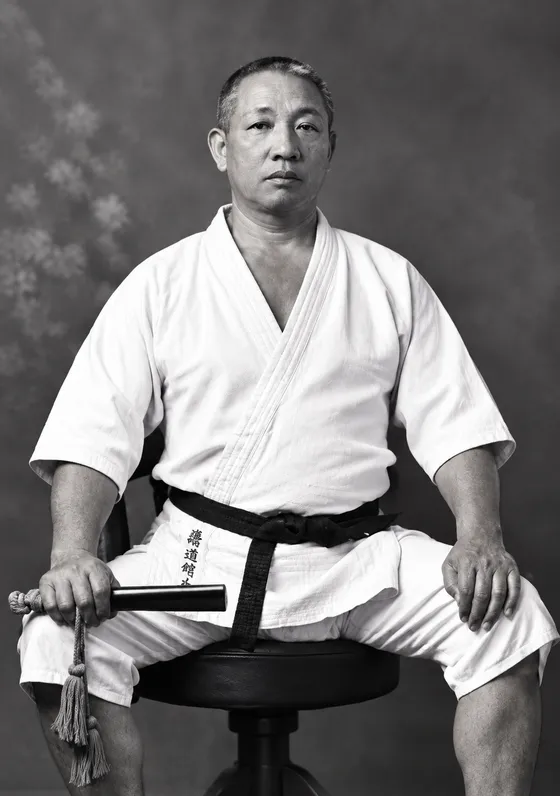
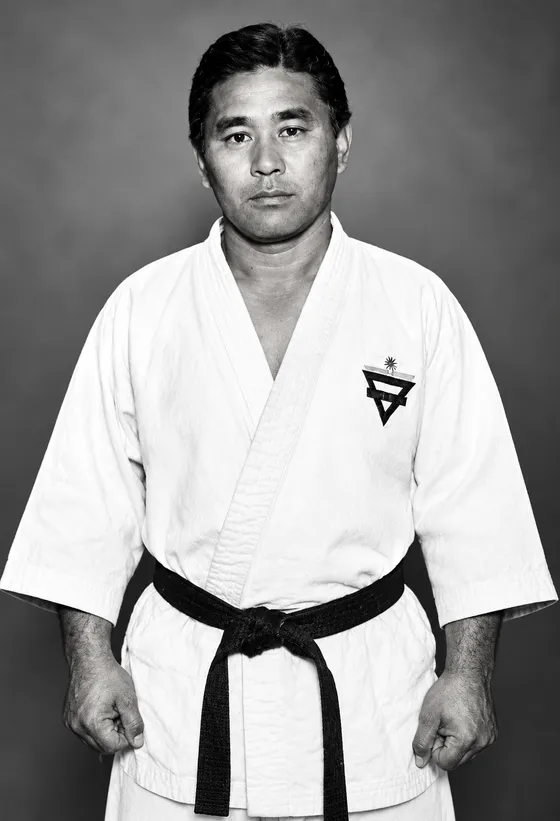
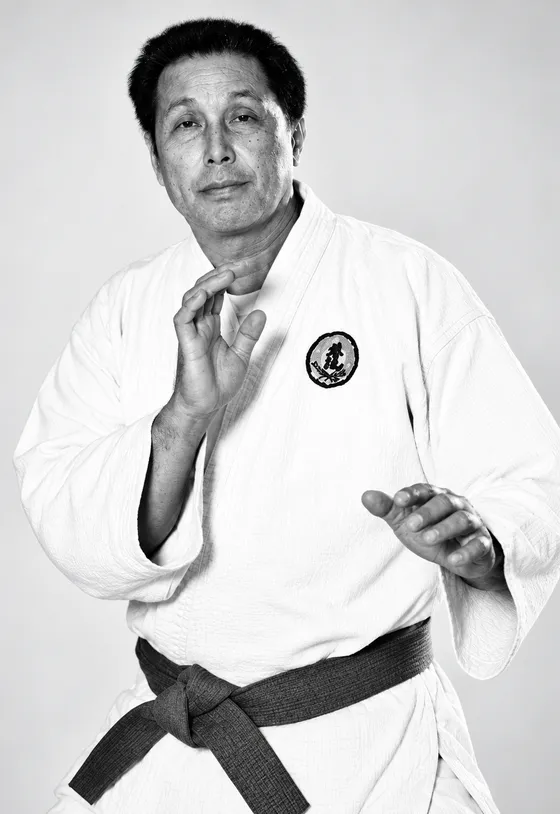
Professor Wally Jay.
Born in Honolulu in 1917, Wally Jay began boxing at eleven and trained in jujitsu under Paul Kaelemakule as a teenager. He earned his black belt in Kodenkan Jujitsu in 1944, and received a Certificate of Mastery from Professor Okazaki himself in 1948.
But Jay was never content to simply replicate what he'd learned. He refined and sharpened traditional techniques throughout his career - as a judo coach producing national champions, as a teacher, and as a tireless innovator. In 1987, Small Circle Jujitsu was formally recognised as a complete martial art style in its own right.
Jay was inducted into the Black Belt Hall of Fame in 1969, named Black Belt's Man of the Year in 1990, and co-founded Jujitsu America in 1978. He taught until his final years, passing away in 2011 at the age of ninety-three.
He is the sole originator of Small Circle Jujitsu. Not a link in a long chain - the source.
The philosophy
Sixteen principles.
One idea.
Over decades of teaching and refining, Professor Jay distilled his innovations into sixteen guiding principles - from Balance and Mobility at the foundation, through to advanced concepts like Whiplash, Cascade Effect, and Two-Way Action.
Ten core principles form the bedrock of every technique. Six expanded principles build on that foundation with more advanced applications. Together, they describe a complete approach to leverage, control, and flow.
The philosophy is simple: work with the body's mechanics, not against them. Find the smallest circle that creates the greatest effect. Control, not destruction.
Explore all sixteen principles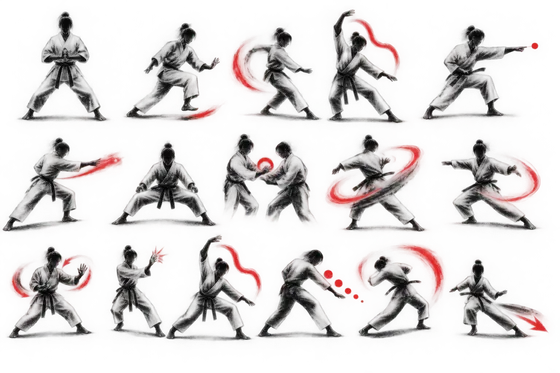
The lineage
A direct line to the source.
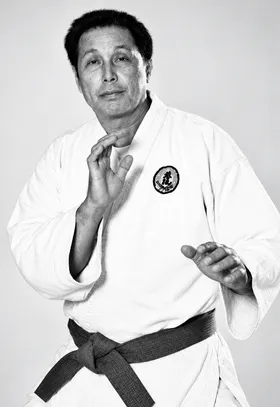
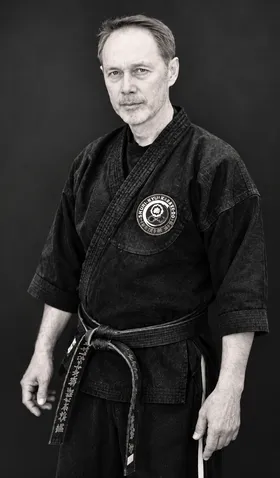
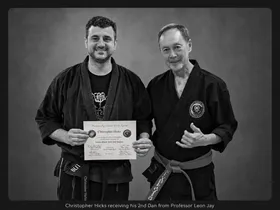
Small Circle Jujitsu has one founder. His son carries it forward. And our instructor trains directly under that son. Three people, no gaps.
“Bruce had great admiration for Professor Wally and his system of Small Circle Jujitsu. Even though Bruce had his own way of martial arts that he called Jeet Kune Do, he learned a great deal about close contact techniques from Professor Wally that he used to enhance his own practice.”
- Linda Lee Cadwell (formerly married to Bruce Lee)
The culture
More than technique.
Professor Jay didn't just teach locks and throws. He taught a way of being on the mat - and off it. Two Hawaiian principles run through everything we do.
Kokua
To help and support one another. In training, this means nobody gets left behind. A senior student helps a beginner. A training partner gives honest feedback. Progress is shared.
Ohana
Family. You're not a customer buying a gym membership - you're joining a small community that trains hard and looks after its own. This is how Wally Jay ran his dojo, and how we run ours.
Join us
Come and train.
Now you know the story - come be part of it. Your first class is free, no experience needed. Message us or just turn up.